Insider Report: 5 E-commerce Clothing Platforms Dominating the US Market in 2026
Advertisements
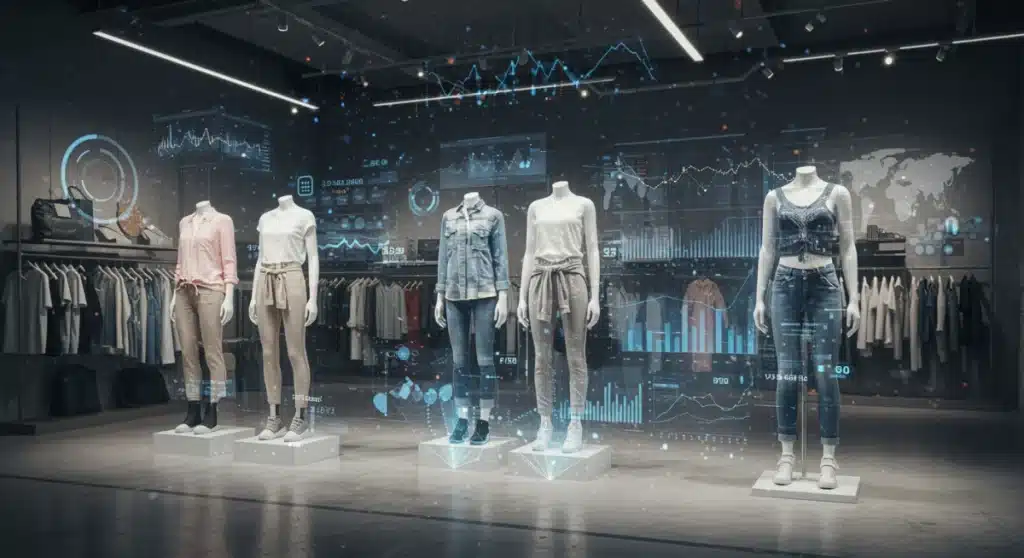
The digital fashion landscape is moving faster than ever, and these E-commerce Clothing Platforms are the ones setting the pace. This exclusive report breaks down the power players currently redefining how Americans refresh their wardrobes in 2026.
Forget outdated retail models; we are witnessing a complete overhaul of the virtual apparel marketplace.
By analyzing cutting-edge logistics and AI-driven curation, we reveal which digital storefronts have successfully captured the modern consumer’s loyalty and wallet.
Advertisements
Whether you are an investor seeking the next big move or a brand navigating the online garment trade, this roadmap is essential. Step inside the strategies of the titans currently commanding the web-based fashion industry across the United States.
The Shifting Landscape of US E-commerce Clothing
The US e-commerce clothing market is undergoing a profound transformation, moving beyond traditional online storefronts to integrated digital ecosystems.
This evolution is driven by consumer expectations for personalized experiences, sustainability, and seamless shopping journeys. Platforms that can meet these demands are gaining significant traction.
Technological innovations, especially in AI, augmented reality (AR), and data analytics, are pivotal in enhancing the online shopping experience.
Advertisements
These tools allow platforms to offer virtual try-ons, hyper-personalized recommendations, and more efficient inventory management, directly impacting customer satisfaction and loyalty. The pace of change continues to accelerate.
Moreover, the emphasis on direct-to-consumer (DTC) models and ethical sourcing is reshaping brand strategies. Consumers are increasingly valuing transparency and social responsibility, pushing platforms to integrate these values into their operational frameworks.
This holistic approach is crucial for sustained growth in the competitive market.
Market Dynamics and Consumer Behavior
Understanding consumer behavior is paramount for any platform aiming for dominance in the US e-commerce clothing sector. The modern shopper seeks convenience, value, and a personalized touch, often influenced by social media and influencer marketing.
Platforms must consistently innovate to capture and retain this evolving audience.
- Personalized product recommendations based on browsing history and purchase patterns.
- Seamless multi-channel shopping experiences, integrating mobile, web, and social commerce.
- Fast and reliable shipping options, including same-day or next-day delivery in urban areas.
- Flexible return policies and easy customer service access, building trust and repeat business.
The rise of Gen Z and Millennial consumers, with their digital native habits and strong ethical considerations, further shapes market dynamics.
Their preference for brands aligned with their values pushes platforms to adopt sustainable practices and transparent communication. This demographic is a powerful force in the market.
Platform 1: Innovator in Hyper-Personalization
This leading platform has distinguished itself through an unparalleled commitment to hyper-personalization, leveraging advanced AI algorithms to tailor every aspect of the shopping experience.
From initial browsing to post-purchase support, the user journey feels uniquely crafted for each individual. This approach significantly boosts engagement and conversion rates.
Their proprietary AI analyzes vast datasets, including past purchases, browsing behavior, style preferences, and even social media activity, to offer highly relevant product suggestions.
This predictive capability minimizes decision fatigue for consumers and maximizes the likelihood of a successful purchase. It’s a game-changer for online fashion retail.
Furthermore, the platform integrates virtual styling services and community-driven content, allowing users to share outfits and receive feedback from peers and professional stylists.
This blend of technology and social interaction creates a sticky ecosystem that keeps users coming back. They are truly setting a new standard in the E-commerce Clothing Platforms.
Advanced AI for Tailored Experiences
The platform’s AI goes beyond basic recommendations, offering dynamic pricing based on user engagement and real-time inventory adjustments.
This sophisticated system ensures that users always see the most relevant and available products at competitive prices, optimizing both customer experience and operational efficiency.
The continuous learning of their AI models means the personalization improves over time.
- Dynamic product curation based on individual style profiles and current trends.
- AI-powered sizing recommendations, reducing returns and improving fit satisfaction.
- Personalized promotional offers and loyalty rewards, enhancing customer lifetime value.
This deep level of personalization creates a strong competitive advantage, fostering a loyal customer base that perceives the platform as their go-to destination for fashion.
Their ability to anticipate and meet individual needs is a core reason for their projected dominance in the E-commerce Clothing Platforms Dominating the US Market in 2026.
Platform 2: The Sustainable Fashion Powerhouse
Sustainability is no longer a niche concern but a mainstream demand, and this platform has positioned itself as a leader in ethical and eco-conscious fashion.
They meticulously curate brands that adhere to strict environmental and social standards, offering consumers a guilt-free shopping experience. This commitment resonates deeply with a growing segment of the market.
Their supply chain is fully transparent, providing detailed information on product origins, manufacturing processes, and material compositions.
This level of openness builds immense trust with consumers who are increasingly wary of greenwashing. It’s a powerful differentiator in a crowded market.
Beyond curation, the platform actively promotes circular fashion initiatives, including resale programs, clothing repair services, and recycling schemes.
They are not just selling clothes but fostering a sustainable lifestyle, making them a significant force in the E-commerce Clothing Platforms. Their impact is both commercial and ethical.
Driving Circular Economy in Fashion
The platform’s dedication to the circular economy extends to collaborations with innovative textile recycling companies and upcycling workshops.
By offering incentives for customers to return or trade in old garments, they actively reduce textile waste and prolong the lifecycle of clothing. This forward-thinking approach sets them apart from traditional retailers.
The platform prioritizes ethical consumption by forging strategic partnerships with certified sustainable brands and independent artisans.
This commitment is reinforced through in-depth educational content that empowers users with knowledge on eco-friendly fashion practices and their global environmental impact.
To close the loop on circularity, the interface features streamlined tools that make selling or donating pre-owned garments a seamless part of the user experience.
Their model proves that profitability and ethical responsibility can coexist, inspiring other platforms to re-evaluate their environmental footprint.
Platform 3: The Experiential Retail Innovator
This platform is redefining online shopping by integrating immersive and interactive experiences that mimic or even surpass the physical retail environment.
They utilize cutting-edge augmented reality (AR) and virtual reality (VR) technologies to allow customers to virtually try on clothes, visualize outfits, and even attend virtual fashion shows. This creates a highly engaging and memorable shopping journey.
Their AR try-on feature, accessible directly through smartphones, has significantly reduced return rates and boosted customer confidence in online purchases.
Users can see how garments look on their own body types, leading to better-informed decisions. This innovation addresses a major pain point in e-commerce clothing.
Furthermore, the platform hosts exclusive virtual events, pop-up experiences in the metaverse, and gamified shopping challenges, transforming routine purchases into exciting adventures. They understand the power of play.
Leveraging AR and VR for Engagement
The integration of AR and VR is not merely a gimmick; it’s a strategic move to bridge the gap between online convenience and the tactile experience of physical shopping.
By allowing customers to interact with products in a three-dimensional space, the platform fosters a deeper connection and reduces purchase anxiety. This technological edge is a critical growth driver.
Beyond simple scrolling, these platforms are revolutionizing the digital fitting room by offering realistic virtual try-on experiences tailored to a diverse range of body shapes and sizes.
This precision is matched by interactive 3D product displays, which allow shoppers to zoom in for a detailed examination of fabric textures and material quality as if they were holding the item in person.
To complete the immersion, brands are hosting global virtual fashion events and showrooms, breaking down geographical barriers to bring high-end runway experiences to a massive, worldwide audience.
Their continuous investment in these immersive technologies ensures they stay ahead of the curve, offering novel experiences that keep their user base captivated.
This dedication to experiential retail makes them a standout contender in the E-commerce Clothing Platforms, setting new benchmarks for digital engagement.

Platform 4: The Community-Driven Marketplace
Recognizing the power of social connection, this platform has built a thriving community around fashion, allowing users to not only buy and sell but also interact, share style tips, and discover new trends together.
It’s less of a store and more of a social network centered on clothing, fostering loyalty through shared interests and mutual support.
Their integrated social features enable users to create profiles, follow influencers, and build personalized feeds based on their style preferences and community interactions.
This organic, user-generated content acts as a powerful marketing tool, driving discovery and sales without traditional advertising. It’s a truly authentic approach.
The platform also empowers small businesses and independent designers, providing them with tools and visibility to reach a wider audience. This symbiotic relationship strengthens the community, offering unique and diverse product selections that appeal to various tastes.
This inclusive model is a key element of their success in the E-commerce Clothing Platforms Dominating the US Market in 2026.
Empowering Independent Sellers and Creators
By providing robust tools for inventory management, secure payment processing, and efficient shipping, the platform lowers the barrier to entry for independent sellers.
This support fosters a vibrant ecosystem of unique and niche fashion items that might not be found on larger, more generalized e-commerce sites. This diversity is a major draw for consumers seeking originality.
- Integrated messaging and forum features for direct buyer-seller communication.
- Curated discovery feeds that highlight emerging designers and trending styles.
- Educational resources and workshops for sellers to grow their online businesses.
Their emphasis on community building and supporting independent creators cultivates a unique market position, proving that a collaborative approach can lead to significant growth.
Platform 5: The Logistics and Supply Chain Master
While often overlooked by consumers, efficient logistics and supply chain management are foundational to e-commerce success, and this platform has mastered it.
Their sophisticated network ensures rapid delivery, seamless returns, and precise inventory control, minimizing delays and maximizing customer satisfaction. This operational excellence is a major competitive advantage.
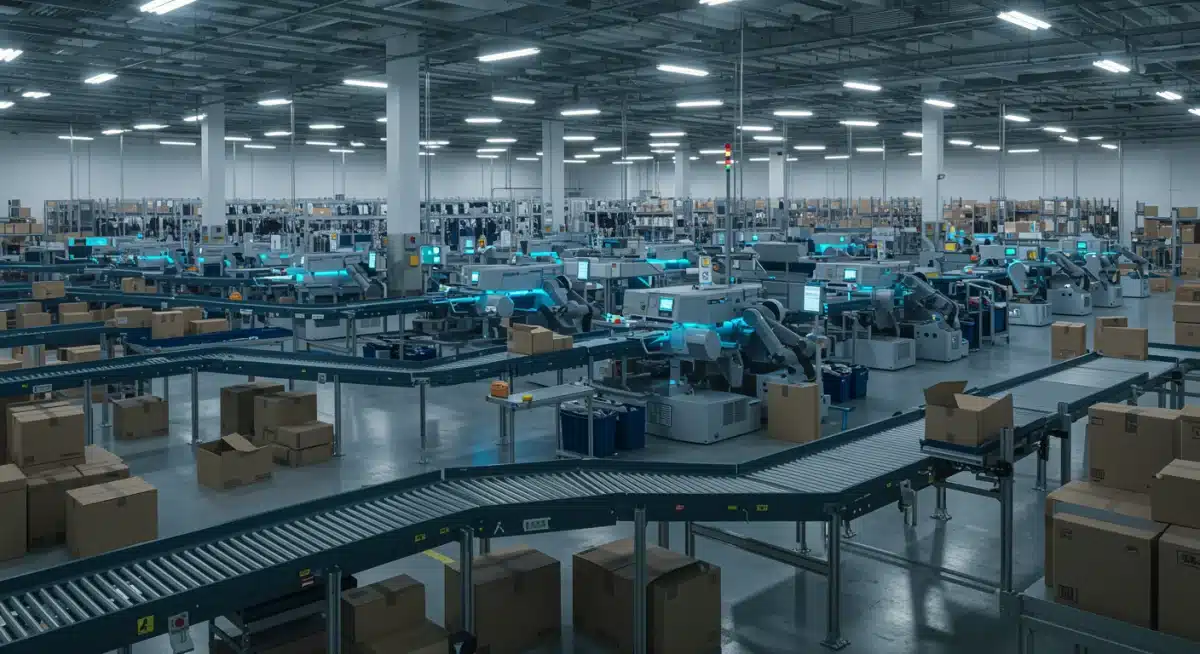
They have invested heavily in automation, AI-driven demand forecasting, and strategically located fulfillment centers across the US.
This allows them to offer competitive shipping speeds and costs, a critical factor for online shoppers. Their ability to deliver consistently and reliably sets them apart.
Furthermore, their robust data analytics provides real-time insights into market trends and inventory needs, enabling proactive adjustments to stock levels and product offerings.
This predictive capability minimizes waste and optimizes profitability, solidifying their position in the E-commerce Clothing Platforms. Their efficiency is unmatched.
Optimizing Delivery and Returns
The platform’s advanced logistical infrastructure includes partnerships with multiple carriers and a proprietary routing system that optimizes delivery paths.
For returns, they offer hassle-free processes, including label-free returns and convenient drop-off locations, which significantly enhances the overall customer experience. This attention to detail in post-purchase operations is crucial for customer retention.
- AI-powered inventory management reducing stockouts and overstocking.
- Multiple delivery options, including expedited and scheduled deliveries.
- Streamlined return process with instant refunds or exchanges.
Their relentless pursuit of operational perfection ensures a smooth and reliable shopping experience, addressing one of the biggest challenges in e-commerce clothing.
This strategic focus on logistics makes them an indispensable force in the E-commerce Clothing Platforms, underpinning their growth with unparalleled efficiency.
Emerging Trends and Future Outlook
The landscape of e-commerce clothing is continuously evolving, with several emerging trends poised to further reshape the market by 2026.
Beyond the dominance of the five platforms highlighted, we anticipate broader shifts in technology, consumer values, and business models. Understanding these trends is crucial for staying competitive.
The integration of Web3 technologies, such as NFTs for digital fashion and blockchain for supply chain transparency, is gaining momentum.
These innovations could unlock new revenue streams and enhance authenticity, addressing concerns about counterfeiting. The potential for digital ownership in fashion is immense.
Furthermore, the focus on hyper-local fulfillment and personalized manufacturing is expected to grow, reducing shipping times and environmental impact.
This shift towards on-demand production could revolutionize inventory management and product customization.
The Role of AI and Data in Future Growth
Artificial intelligence and advanced data analytics will continue to be central to market dominance, enabling platforms to predict trends, personalize experiences, and optimize operations with unprecedented accuracy.
The ability to harness and interpret vast amounts of consumer data will be a key differentiator.
- Predictive analytics for trend forecasting and inventory optimization.
- AI-driven customer service chatbots providing instant support and recommendations.
- Enhanced personalization through biometric data and smart device integration.
Platforms that effectively leverage these technologies will be best positioned to adapt to changing consumer demands and maintain their competitive edge.
The continuous innovation in AI and data science will be a defining characteristic of successful e-commerce clothing platforms in the coming years.
Challenges and Opportunities Ahead
Despite the immense growth potential, the e-commerce clothing market faces significant challenges, including intense competition, evolving privacy regulations, and the need for continuous technological adaptation.
Platforms must navigate these complexities while maintaining profitability and customer satisfaction. The stakes are incredibly high.
Cybersecurity threats and data breaches remain a constant concern, requiring substantial investment in robust security measures to protect sensitive customer information.
Trust is paramount, and any compromise can severely damage a platform’s reputation and market standing. Proactive defense is non-negotiable.
However, these challenges also present opportunities for innovation and differentiation. Platforms that can effectively address consumer concerns around privacy, sustainability, and ethical sourcing will build stronger brands and secure long-term loyalty.
The ability to turn obstacles into advantages is a hallmark of market leaders identified in the E-commerce Clothing Platforms Dominating the US Market in 2026.
Navigating Regulatory Landscape and Consumer Trust
The increasing scrutiny over data privacy and consumer protection necessitates that platforms remain agile in their compliance efforts.
Adapting to new regulations, such as those related to data handling and advertising, is not just a legal requirement but a cornerstone of building consumer trust. Transparency in data usage will become even more critical.
- Proactive compliance with evolving data privacy laws like CCPA and potential federal regulations.
- Clear communication of data policies and user control over personal information.
- Investing in secure payment gateways and fraud prevention technologies.
By prioritizing ethical data practices and transparent operations, platforms can differentiate themselves and foster a sense of security among their user base. This commitment to trust and compliance will be a key factor in sustained growth and market leadership.
| Key Platform Differentiator | Brief Description of Impact |
|---|---|
| Hyper-Personalization | AI-driven tailored shopping experiences, boosting engagement. |
| Sustainability Focus | Ethical sourcing and circular fashion initiatives building trust. |
| Experiential Retail | AR/VR integration for immersive and interactive shopping. |
| Logistics Excellence | Optimized supply chain for fast delivery and efficient returns. |
Frequently Asked Questions About E-commerce Clothing Platforms
The growth is primarily driven by technological advancements like AI and AR, increasing consumer demand for convenience and personalization, and a growing emphasis on sustainable and ethical practices. Mobile shopping and social media influence also play significant roles in shaping purchasing habits.
Personalization is extremely important. Platforms utilize AI to offer tailored product recommendations, virtual try-ons, and customized shopping experiences. This approach significantly enhances customer satisfaction, reduces return rates, and builds strong brand loyalty in a highly competitive market.
Sustainability is a crucial differentiator. Consumers increasingly seek transparent supply chains, ethically sourced products, and eco-friendly practices. Platforms that integrate circular fashion initiatives and promote responsible consumption are gaining a significant advantage and fostering trust among their target audience.
Beyond convenience, platforms are integrating immersive technologies like AR/VR for virtual try-ons and interactive product displays. They also host virtual events and foster community-driven content, transforming online shopping into an engaging and entertaining experience that rivals or surpasses physical retail.
Key challenges include intense competition, evolving data privacy regulations, and the need for continuous technological adaptation. Cybersecurity threats and the pressure to maintain robust, efficient supply chains are also significant hurdles that require ongoing investment and strategic management to overcome.
Looking Ahead: The Future of Fashion E-commerce
The E-commerce Clothing Platforms Dominating the US Market in 2026 underscores a pivotal moment in digital fashion retail.
The platforms identified are not just selling clothes; they are architecting the future of how consumers interact with fashion, driven by technology, sustainability, and community.
Continued innovation in AI, immersive experiences, and ethical practices will define market leadership.
For brands and consumers alike, understanding these shifts is crucial. The coming years will see an even greater integration of digital tools into every facet of the shopping journey, making online fashion more personalized, engaging, and responsible.
The competitive landscape will remain dynamic, rewarding agility and foresight.
Monitoring these leading platforms and the emerging trends they champion will offer valuable insights into the broader evolution of commerce.
Their strategies will likely set benchmarks for the entire industry, dictating consumer expectations and influencing investment decisions across the US e-commerce clothing sector for years to come.
